
Quick Space Blog

Building a Small Warehouse Under 1,000 m² in the UK
Warehouses under 1,000 m² are compact facilities designed for light storage, local distribution, or overflow inventory. While smaller than standard warehouses, they still require careful planning, construction, and fit-out to ensure operational efficiency, regulatory compliance, and cost-effectiveness.

How to Manage Condensation and Moisture in Warehouses with Flexible PVC Roofs
Condensation and moisture are among the biggest challenges in warehouses and temporary buildings. Effective moisture management in these buildings focuses on airflow, drainage, and careful environmental monitoring rather than relying solely on insulation.

How to Make the Most of Your Existing Warehouse Space
Your warehouse is a key business asset, but inefficient use of your space can cost you time and money. With careful planning and smart strategies, you can increase capacity, improve workflow, and reduce costs—without expanding your footprint.

How Temporary Warehouses Can Support Short-Term Sales Spikes
In today’s competitive economy, you need to be ready to react quickly to changes in demand. Sales can rise suddenly because of new contracts, product launches, promotional activity, or shifts in market conditions. When this happens, your existing warehouse space may no longer

How Temporary Warehouses Help You Benefit from Economies of Scale
One of the most effective ways to increase profitability is by taking advantage of economies of scale. By producing or purchasing in larger quantities, you can reduce your unit costs, negotiate better supplier terms, and spread fixed expenses over a greater output. The

How temporary warehouses withstand bad weather
British weather is not traditionally known for being extreme, but we are increasingly seeing high winds, heavy rain and, on occasion, heavy snowfall. Here’s how we ensure our temporary warehouses protect what you need to store or do within them.
Temporary structures are
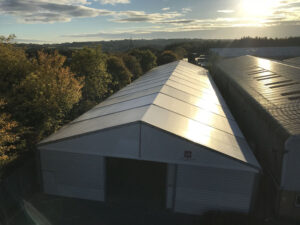
Using temporary warehouses to manage risk
n the fast-moving world of UK logistics, risk is ever-present. From fluctuating demand and supply chain disruptions to extreme weather and regulatory changes, logistics firms face a complex array of operational challenges. Building a robust risk management strategy is essential not only for

How to secure a temporary warehouse to the ground
Securing a temporary warehouse building to the floor is crucial for safety, structural integrity, and compliance with local planning regulations. The method depends on the structure type (our temporary warehouses are all steel frame-based), the ground surface (concrete, asphalt or gravel), and the

How to Reduce Theft by Using Temporary Warehouses
Theft remains one of the most persistent threats in the logistics industry. Whether it’s opportunistic pilferage, organised cargo crime, or insider theft, losses can be substantial, damaging your reputation, disrupting operations, and inflating insurance premiums. In the UK, where supply chains often involve