
Temporary Storage Options for Manufacturing Businesses

Manufacturing businesses often face periods where storage capacity becomes stretched. Increased production volumes, seasonal demand, supply chain disruption, delayed outbound shipments or factory refurbishment projects can all create sudden pressure on available space.
When this happens, temporary storage solutions can provide the flexibility needed to keep production moving without committing to permanent expansion.
The right temporary storage option can help you protect inventory, improve operational flow and create breathing space within your facility while supporting future growth.
Refurbishing your warehouse

Your options when you absolutely must keep trading. Refurbishing your warehouse is often essential for growth, compliance, or efficiency gains. But how do you maintain operations while the work takes place. A full shutdown is rarely commercially viable without compromising safety, productivity, or revenues. Here are the main options available to you, along with how to decide what will work best in practice.
Getting the flow right around your warehouse

Planning the flow of goods in a small warehouse is less about space alone and more about reducing friction. Every unnecessary movement costs time, money, and increases error risk. The most effective approach is to design around simplicity, visibility, and logical progression.
Controlling temperature in a temporary space

When you add a temporary space for your business, one of the earliest questions to answer is about temperature. Depending on what is going into the space, the temperature requirements can vary considerably, and this is where insulation comes in.
Temporary Warehouse Space on Owned / Leased Land Supports Manufacturing and Logistics
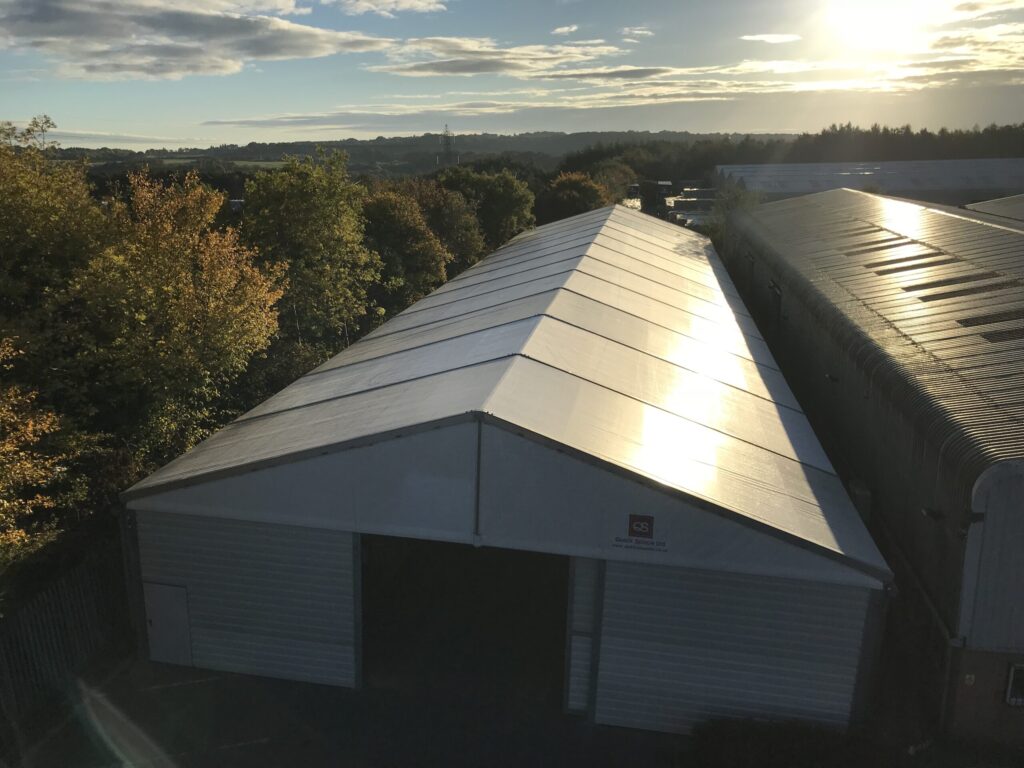
The CBI describes the UK economy as uncertain. Growth forecasts have increased slightly, Louise Hellem, leading Chief Economist, at the CBI to say: “While it’s welcome to see our growth forecast upgraded for next year, the mood music reads more ‘cautious optimism’ than ‘cause for celebration.’
Economic uncertainty has become a defining challenge for modern manufacturing and logistics businesses. Volatile demand, fluctuating input costs, disrupted supply chains, and changing customer expectations put pressure on operations that rely on precise timing, capacity, and efficiency.
Pros and Cons of Warehousing Options
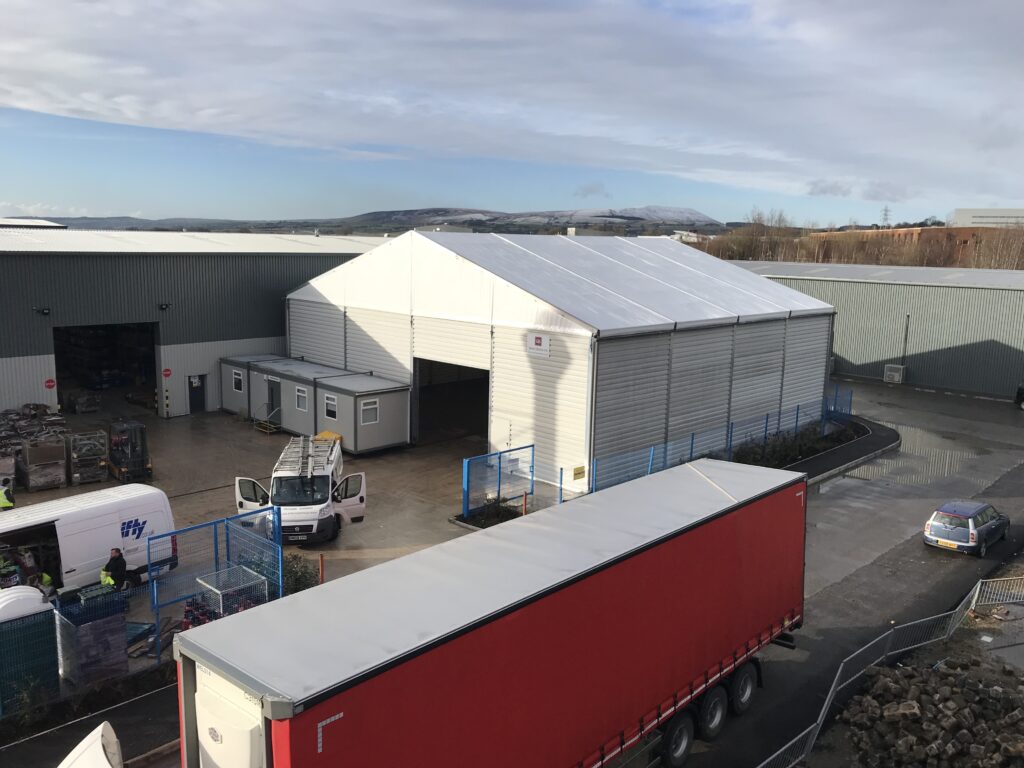
When a growing business begins feeling the squeeze on space, warehousing becomes a strategic decision, not just a storage problem. Whether you manufacture, assemble, or distribute, the way you expand capacity affects cash flow, efficiency, and long-term flexibility. There are three common options:
1. Temporary warehouses on your site
2. Permanent warehouse on your site
3. Leasing warehouse space somewhere else
Here is a clear look at the advantages and drawbacks of three common options.
Opex vs Capex for Temporary Warehouses

For many organisations, warehousing has shifted from a fixed, long-term asset to a dynamic operational lever that needs to expand or contract as conditions change. Seasonal demand, project-based work, uncertainty in supply chains, and the growth of e-commerce have accelerated the search for more adaptable storage options. This is where temporary warehouses enter the picture, offering rapid deployment, reduced upfront spend, and the ability to scale space in line with operational realities.
Continuity Planning for Logistics Firms

In logistics, ensuring continuous operations during disruptions is critical. While many firms focus on transport routes or IT systems, warehouse and storage redundancy are often the most effective way to maintain service levels when unexpected events occur. From natural disasters to equipment failure or sudden spikes in demand, having alternative storage solutions ensures goods remain accessible, secure, and ready for distribution.
Building a Small Warehouse Under 1,000 m² in the UK
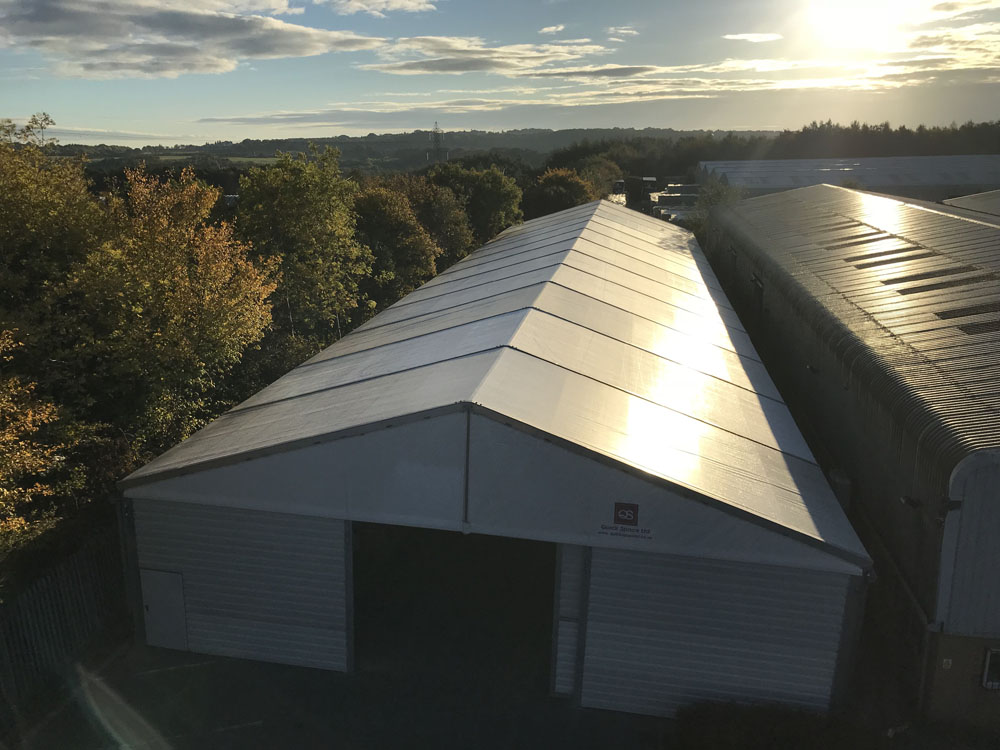
Warehouses under 1,000 m² are compact facilities designed for light storage, local distribution, or overflow inventory. While smaller than standard warehouses, they still require careful planning, construction, and fit-out to ensure operational efficiency, regulatory compliance, and cost-effectiveness.
How to Make the Most of Your Existing Warehouse Space
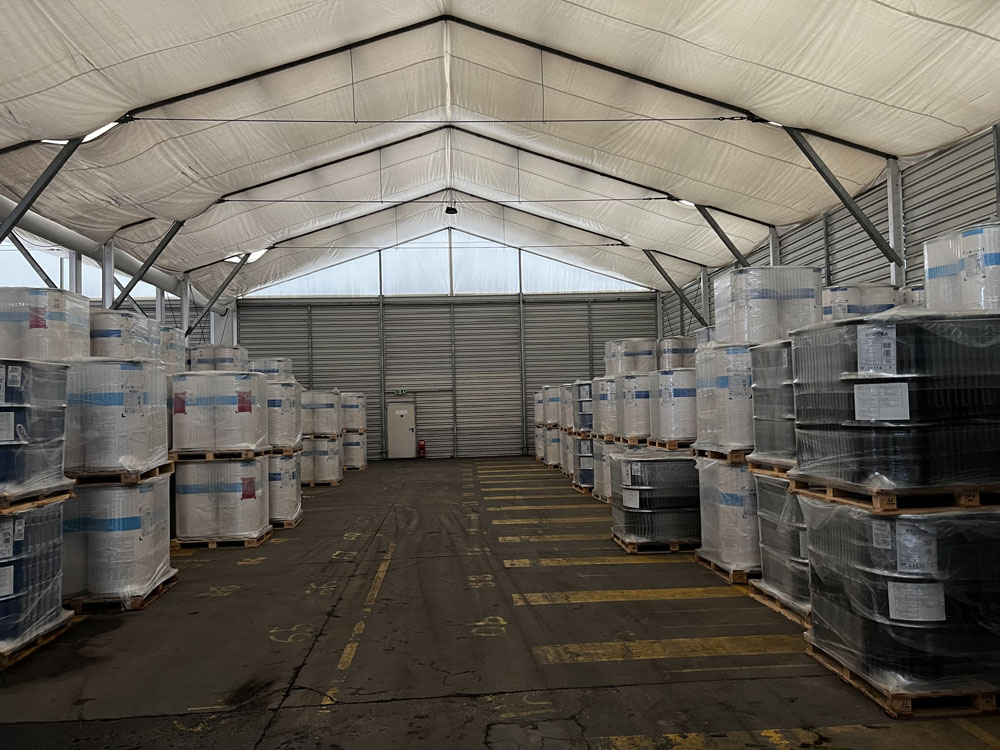
Your warehouse is a key business asset, but inefficient use of your space can cost you time and money. With careful planning and smart strategies, you can increase capacity, improve workflow, and reduce costs—without expanding your footprint.